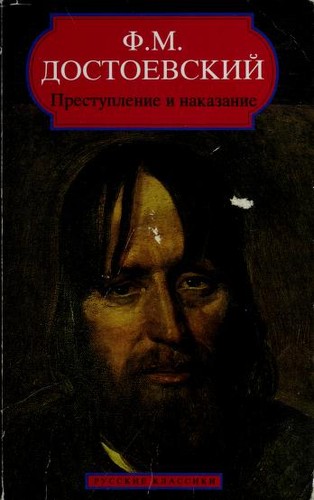
Complete Full-Text Guide to Crime and Punishment by Fyodor Dostoevsky
A broke student murders a cruel moneylender to prove he is an extraordinary genius above the law. Instead of feeling powerful, he is slowly driven mad by crushing guilt, fear, and his own conscience.
Prologue & Central Premise
Have you ever made a selfish choice and tried to convince yourself it was actually smart or justified?
That is the exact trap at the center of Crime and Punishment. A brilliant, broke college student named Raskolnikov convinces himself that the world is divided into ordinary sheep and extraordinary leaders like Napoleon.
He decides that if a genius has to break a rule or eliminate a bad person to do great things, society should forgive them. So he picks up an axe and tests his theory.
What happens next is not a police chase. It is a terrifying, realistic look at what happens inside your mind when you realize you cannot outsmart your own guilt.
Most of us will never commit a crime. But almost all of us make excuses when we treat people badly, cut corners, or act selfishly.
Dostoevsky shows that intellect is not the same as wisdom. When your brain invents clever arguments to silence your conscience, you do not become a powerful mastermind. You become paranoid, lonely, and miserable.
Reading this book helps you understand how make excuses works in your own head and why honesty with yourself is the only way to have real peace.
Chapter I: The Dangerous Theory: 'I Am Above the Rules'
The Dangerous Theory: 'I Am Above the Rules'
Raskolnikov lives in a tiny room that feels like a coffin. He has no money, he wears rags, and his pride is bruised. Instead of dealing with his reality, he retreats into dangerous daydreams.
He writes an article claiming that humanity is split into two groups: the ordinary crowd who must obey laws, and extraordinary people who have the right to break laws if it serves a bigger vision.
No amount of intellect gives anyone permission to treat other human beings as disposable tools.
The Dangerous Theory: 'I Am Above the Rules' — Core Mechanics
At the core of this principle lies a foundational dynamic: The mistaken belief that your talent, intelligence, or goals exempt you from common decency.. Understanding this reality is vital because People use this mindset every day to justify lying, cheating on exams, or taking advantage of coworkers.
Consider how this operates in practice: A startup founder who steals company funds because they tell themselves their genius will eventually make everyone rich.
To prove he belongs to the extraordinary group, he decides to murder an old woman who lends money at cruel interest rates. He tells himself he is doing society a favor.
Chapter II: The Unbearable Weight of a Secret
The Unbearable Weight of a Secret
Right after the murder, Raskolnikov hides the stolen trinkets under a random stone. He does not even spend the money. The robbery was never the real point—his ego was.
Instead of feeling like Napoleon, he gets physically sick with fever. Whenever someone looks at him on the street, his heart races. He suspects every policeman knows his secret.
A guilty mind turns every harmless comment into an accusation.
The Unbearable Weight of a Secret — Core Mechanics
At the core of this principle lies a foundational dynamic: The psychological stress created when your actions clash directly with your core human conscience.. Understanding this reality is vital because You can fool other people, but you cannot fool your subconscious mind.
Consider how this operates in practice: Cheating on an important test and feeling sick every time the teacher compliments your high grade.
He visits the police station for an unrelated debt and faints simply because someone mentions the murder. His body and nervous system refuse to play along with his intellectual theory.
The Real Punishment Was Not Siberia
You might expect the climax of the book to be Raskolnikov's trial or his prison sentence in Siberia.
The real twist is that his punishment began the exact second the crime was finished. The prison sentence in cold Siberia actually brought him relief.
Being in prison gave him permission to stop lying, stop hiding, and finally sleep at night. The worst prison was his own paranoid mind.
Chapter III: The Mind Games with the Detective
The Mind Games with the Detective
The investigating magistrate, Porfiry Petrovich, has almost no physical evidence against Raskolnikov. But Porfiry understands human psychology deeply.
Instead of arresting Raskolnikov, Porfiry invites him for friendly tea chats. He smiles, talks philosophy, and lets Raskolnikov dig his own mental grave.
Liars exhaust themselves trying to control every detail of their story.
The Mind Games with the Detective — Core Mechanics
At the core of this principle lies a foundational dynamic: Letting someone's anxious overthinking cause them to reveal the truth on their own.. Understanding this reality is vital because When someone is hiding the truth, pressure and waiting cause their story to crack.
Consider how this operates in practice: A manager calmly asking an employee to explain their numbers again until the made-up figures fall apart.
Porfiry tells him: 'A criminal who relies on logic will eventually run straight into my arms because his conscience will not let him rest.'
Chapter IV: Redemption Through Humility and Truth
Redemption Through Humility and Truth
The turning point comes when Raskolnikov meets Sonya Marmeladov. Sonya is poor and forced to support her starving family, but her heart is full of humility, compassion, and faith.
When Raskolnikov finally confesses his secret to Sonya, she does not scream or attack him. She weeps for his suffering and tells him to go to the crossroads, kiss the earth, and confess to everyone.
Real strength is not hiding your flaws, but having the courage to repair them.
Redemption Through Humility and Truth — Core Mechanics
At the core of this principle lies a foundational dynamic: Owning your wrongs openly and accepting the real consequences.. Understanding this reality is vital because Hiding mistakes keeps you trapped in the past; facing them lets you move forward.
Consider how this operates in practice: Admitting to a teammate that you lost an important file instead of blaming the software.
He finally walks into the police station and admits his crime. Sentenced to labor in Siberia, he gradually sheds his pride. Only by accepting his humanity does he begin to heal.
Epilogue & The Living Legacy
Crime and Punishment is not a murder story. It is a mirror held up to human pride.
Whenever we think we are too gifted, too stressed, or too unique to play by the rules of honesty, we are walking Raskolnikov's path.
True freedom does not come from doing whatever you want without consequences. True freedom comes from living with a clean conscience and the courage to tell the truth.