Complete Full-Text Guide to Frankenstein by Mary Shelley
Young scientist Victor Frankenstein discovers the secret of life and stitches together a living creature. Horrified by what he made, he flees—leaving an intelligent, lonely monster who seeks revenge for being abandoned.
Prologue & Central Premise
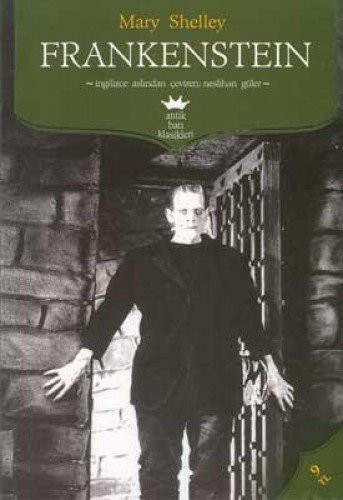
Most people think Frankenstein is a story about a green, brainless, groaning monster with bolts in its neck.
If that's what you think, you have never experienced Mary Shelley's true story.
Written when Shelley was only 19 years old, the real novel features a creature that is articulate, highly intelligent, and desperately yearning for love.
The real monster of the story is not the creature. It is the ambitious scientist, Victor Frankenstein, who rushes to create life for personal fame, and then runs away screaming the second he has to take care of it.
We live in an age of AI, genetic editing, and rapid technological breakthroughs where creators constantly ask 'Can we build this?' without asking 'Can we manage the fallout?'
Frankenstein was the very first true science-fiction novel, and it predicted our exact technological dilemma 200 years ago.
It is a warning against intellectual arrogance, deadbeat parenthood, and the danger of judging people solely by their physical appearance.
Chapter I: The Obsession to Play God
The Obsession to Play God
Victor Frankenstein grows up in a privileged, loving home in Geneva. But at university in Germany, he becomes consumed with a single arrogant obsession: conquering death.
For nearly two years, he isolates himself from family, friends, and sunlight. He raids slaughterhouses and graveyards and bone vaults, sewing together bones and muscles to craft a gigantic human form.
If you build it, you are responsible for its impact on the world.
The Obsession to Play God — Core Mechanics
At the core of this principle lies a foundational dynamic: The dangerous overconfidence that your brilliance allows you to ignore the laws of nature and ethics.. Understanding this reality is vital because It drives people to launch technologies or systems without safety nets.
Consider how this operates in practice: A tech startup launching an algorithm that radicalizes users, then claiming 'we just built the code; it's not our fault how people use it.'
Victor is blinded by pride: 'A new species would bless me as its creator and source; many happy and excellent natures would owe their being to me.' He never once pauses to consider what kind of life this new being will have.
Chapter II: The Crime of Abandonment
The Crime of Abandonment
On a dreary night in November, the creature's yellow eye flutters open. He breathes hard, his muscles convulse, and he reaches out a massive hand with a gentle smile.
Instead of feeling pride or fatherly love, Victor is struck with sickening horror at the creature's grotesque appearance. He sprints out of the room, collapses in his bedroom, and abandons the newborn being to wander the streets of Geneva.
Creation is a 1% effort; caretaking is the 99%.
The Crime of Abandonment — Core Mechanics
At the core of this principle lies a foundational dynamic: Failing to guide, protect, and nurture something that is entirely dependent on you.. Understanding this reality is vital because Unparented creations develop without moral structure or safety.
Consider how this operates in practice: A manager founding a new division, dumping complex tasks on junior staff, and disappearing to avoid blame.
Victor commits the ultimate crime: bringing a sensitive, intelligent being into existence and immediately leaving it helpless in an unfamiliar world.
The Creature is More Articulate Than His Creator
Pop culture shows Frankenstein's monster as a mute brute who groans and throws furniture.
In Shelley's novel, the creature speaks with exquisite, poetic eloquence. His philosophical debates with Victor show that he possesses far greater self-awareness, empathy, and intellectual maturity than Victor ever did.
Chapter III: The Creature's Education and Rejection
The Creature's Education and Rejection
The monster is not born evil. Alone in the woods, he discovers fire, learns to eat berries, and watches a poor family living in a cottage through a crack in the wall.
He listens to them, learns fluent French, and reads Milton's Paradise Lost and Plutarch's Lives. He secretly chops wood for them at night to ease their poverty. His heart is full of tenderness.
Cruelty creates the monsters it claims to fear.
The Creature's Education and Rejection — Core Mechanics
At the core of this principle lies a foundational dynamic: When repeated cruelty and exclusion force a sensitive person into hostility.. Understanding this reality is vital because It explains how communities create their own worst enemies through ostracization.
Consider how this operates in practice: A bullied student who is constantly mocked for their clothes until they become hostile and antisocial.
Believing kindness will overcome prejudice, he enters the cottage when only the blind father is home. The old man listens to him with warmth. But when the children return, they scream, attack him with a stick, and run away. The creature weeps in agony: 'I was kind and caring and good; misery made me a fiend.'
Chapter IV: The Mutual Destruction on the Arctic Ice
The Mutual Destruction on the Arctic Ice
The monster tracks Victor down and begs for one compromise: create an equally ugly female companion so he will not be entirely alone in the universe. Victor initially agrees, but destroys the half-finished female out of fear of creating a race of monsters.
The creature warns Victor chillingly: 'I will be with you on your wedding night.' On that night, the creature strangles Victor's bride, Elizabeth.
Revenge is a suicide mission disguised as justice.
The Mutual Destruction on the Arctic Ice — Core Mechanics
At the core of this principle lies a foundational dynamic: A destructive feedback loop where each act of retaliation justifies an even worse counter-attack.. Understanding this reality is vital because It leaves everyone dead or broken with zero winners.
Consider how this operates in practice: A bitter divorce where both spouses spend millions on lawyers just to hurt each other, bankrupting both.
The novel ends in the frozen Arctic. Victor dies of exhaustion pursuing the creature across the ice floes. The monster stands over Victor's corpse, weeping tears of genuine grief: 'No sympathy may I ever find... I shall die, and what I now feel be no longer felt.' He leaps onto an ice raft, lost in darkness.
Epilogue & The Living Legacy
Frankenstein is the ultimate cautionary tale about human foolish pride.
It shows that our greatest danger is not our lack of power, but our lack of love and responsibility when we wield power.
Before you set out to conquer the world or invent the next miracle, make sure your heart is big enough to care for the consequences.