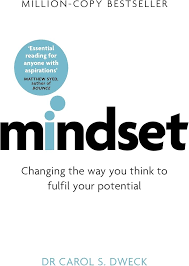
Complete Full-Text Guide to Mindset by Carol S. Dweck
World-renowned Stanford psychologist Carol S. Dweck reveals how the simple belief that our abilities can be developed transforms achievement, resilience, and relationships.
Prologue & Central Premise
Have you ever noticed two people react completely differently to the exact same failure? One person fails an exam or loses a client and thinks, 'I am just not smart enough for this, I quit.' The other person gets the same bad grade and thinks, 'What did I miss? Let me figure this out.'
Stanford psychologist Carol Dweck spent decades researching why some people thrive under pressure while others freeze up.
She discovered that your entire trajectory in life comes down to one core belief: do you think your abilities are carved in stone, or can they grow with effort and practice?
If you believe talent is fixed, every mistake feels like a permanent verdict on your worth. When you switch to a growth mindset, challenges stop being threats and start being the exact way you get smarter.
Chapter I: The Two Mindsets: Fixed vs. Growth
The Two Mindsets: Fixed vs. Growth
In a fixed mindset, people believe their qualities are carved in stone. You have a certain amount of intelligence, a certain personality, and a certain moral character. The urgent goal becomes proving that you have enough of these traits, leading to constant performance anxiety.
In a growth mindset, your basic qualities are things you can cultivate through your efforts. Although people differ in their initial talents and interests, everyone can change and grow through application and experience.
Your starting point does not determine your final destination.
The Two Mindsets: Fixed vs. Growth — Core Mechanics
At the core of this principle lies a foundational dynamic: The belief that your abilities and intelligence can be developed through hard work, good strategies, and input from others.. Understanding this reality is vital because It creates a love of learning and a resilience that is essential for great accomplishment.
Consider how this operates in practice: Struggling with a difficult coding problem and thinking, 'My brain is making new connections right now,' rather than 'I am not a math person.'
Brain imaging studies show that when fixed-mindset people receive feedback, their brains only light up when they hear whether they were right or wrong. When they are given instructions on how to improve, their brains shut off. Growth-mindset people show the opposite pattern: their brains light up most when learning how to solve the problem.
Chapter II: The Danger of Praising 'Natural Talent'
The Danger of Praising 'Natural Talent'
Parents and teachers often tell children, 'You solved that so quickly, you are so smart!' While well-intended, this praise sends a dangerous message: if success means I am smart, then struggling means I am dumb.
Children praised for intelligence soon become afraid of hard challenges. They pick easy tasks to keep looking smart. Children praised for effort and strategy, on the other hand, actively choose harder problems because they want to stretch their brains.
Praise the process, not the pedigree.
The Danger of Praising 'Natural Talent' — Core Mechanics
At the core of this principle lies a foundational dynamic: Praising the strategy, concentration, and persistence used rather than innate intelligence or talent.. Understanding this reality is vital because It ties self-esteem to controllable effort rather than uncontrollable ego.
Consider how this operates in practice: Saying 'I love how you tried three different approaches until it worked' instead of 'You are a natural genius.'
Effort Is Not Evidence of Incompetence
Society teaches us to worship effortless talent: the student who aces the test without studying, the athlete who looks like they aren't even trying.
Dweck flips this completely: the willingness to look clumsy, ask questions, and struggle through confusion is the only real path to mastery. Effort is not a sign of weakness; it is the currency of growth.
Chapter III: Relationships and the 'Mind-Reading' Trap
Relationships and the 'Mind-Reading' Trap
Mindset shapes love and friendships just as deeply as it shapes careers. In a fixed mindset, people believe that if two people are meant to be together, everything should come naturally. Disagreements are taken as proof that the relationship is defective.
In a growth mindset, people know that great relationships take continuous communication, work, and overcoming differences together. Partners don't expect each other to read minds; they talk through issues openly.
Great relationships are made, not born.
Relationships and the 'Mind-Reading' Trap — Core Mechanics
At the core of this principle lies a foundational dynamic: Viewing a relationship as something both people actively build and nurture, rather than a magical match that requires zero maintenance.. Understanding this reality is vital because Prevents toxic resentment and silent scorekeeping.
Consider how this operates in practice: Saying 'Let me explain what I felt when you said that' instead of waiting for your partner to guess why you are upset.
Epilogue & The Living Legacy
You do not need to spend your life constantly proving that you are already talented, smart, or flawless.
The moment you let go of the need to look perfect, you free up all your mental energy to actually learn, experiment, and grow.
Treat every stumble not as an indictment of your worth, but as an invitation to practice. Your potential is an open question.