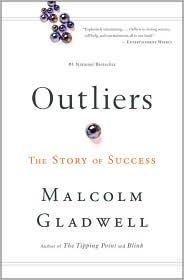
Complete Full-Text Guide to Outliers by Malcolm Gladwell
Malcolm Gladwell explores the world of top performers—from tech billionaires to sports legends—to reveal what really makes them successful.
Prologue & Central Premise
Why do some people achieve extraordinary, world-changing success? We love the lone genius story: the lone inventor in a garage, the self-made billionaire who pulled himself up by his bootstraps, the athlete born with superhuman talent.
Malcolm Gladwell wrote Outliers to prove that this story is a complete myth.
When you look beneath the surface of giants like Bill Gates, The Beatles, and Canadian hockey superstars, you discover that their success was paved by hidden advantages, extraordinary timing, and cultural opportunities they did nothing to earn.
When we believe success is 100% individual talent, we judge struggling people too harshly and praise winners too blindly. Understanding the anatomy of success gives us humility, gratitude, and a blueprint for building better systems for everyone.
Chapter I: The Matthew Effect and the Hockey Rink
The Matthew Effect and the Hockey Rink
Gladwell starts with Canadian junior hockey. A huge number of top hockey players are born in January, February, and March.
Why? The youth cutoff date is January 1st. A boy born in January is competing against boys born in December. At age nine, ten months of physical maturity makes him bigger, faster, and stronger. He gets picked for the traveling all-star team, gets better coaching, plays three times as many games, and by age eighteen, the initial accidental calendar advantage has compounded into true professional supremacy.
Those who have will be given more.
The Matthew Effect and the Hockey Rink — Core Mechanics
At the core of this principle lies a foundational dynamic: A small head start that opens up special practice opportunities, which snowball into a giant lead over time.. Understanding this reality is vital because It shows that early success is often less about natural talent and more about lucky calendar cutoffs.
Consider how this operates in practice: A child who enters school slightly older is perceived as 'gifted,' given extra enrichment, and eventually tops the class.
Chapter II: The 10,000-Hour Rule and Lucky Breaks
The 10,000-Hour Rule and Lucky Breaks
Gladwell popularized psychologist Anders Ericsson's research: reaching world-class mastery in anything complex requires roughly 10,000 hours of deliberate practice.
The catch? It is almost impossible to log 10,000 hours by age twenty unless someone pays your bills, gives you extraordinary access, and opens doors. The Beatles didn't just practice in their bedrooms; an eccentric club owner in Hamburg hired them to play eight hours a night, seven days a week. Bill Gates happened to attend the only middle school in America with a real-time computer terminal in 1968.
Preparation is nothing without the platform to practice.
The 10,000-Hour Rule and Lucky Breaks — Core Mechanics
At the core of this principle lies a foundational dynamic: The rare social and technological openings that allow someone to accumulate massive practice hours before anyone else.. Understanding this reality is vital because Hard work is necessary, but without the lucky opportunity to work hard, talent remains dormant.
Consider how this operates in practice: Gates getting unlimited midnight access to a university mainframe as an eighth-grader.
The Self-Made Man Does Not Exist
Western society is obsessed with celebrating the 'self-made' billionaire who supposedly pulled himself up by sheer individual grit.
Gladwell's definitive revelation is that no one makes it alone. Every outlier was born in a specific year, into a specific family, with specific cultural legacies, and was handed extraordinary breaks. Success is a communal gift.
Chapter III: The Trouble with Geniuses: Why IQ Has a Limit
The Trouble with Geniuses: Why IQ Has a Limit
Gladwell contrasts Christopher Langan (IQ of 195, works on a farm, dropped out of college) with J. Robert Oppenheimer (father of the atomic bomb, brilliant social navigator).
Langan had staggering raw brainpower, but zero practical intelligence: he didn't know how to negotiate with university deans or navigate institutions. Oppenheimer was raised with 'concerted cultivation'—learning how to assert himself, talk to power, and charm his way out of trouble.
Social savvy beats raw IQ in the real world.
The Trouble with Geniuses: Why IQ Has a Limit — Core Mechanics
At the core of this principle lies a foundational dynamic: The rule that IQ only matters up to a basic level (around 120). After that, common sense, social skills, and grit matter far more.. Understanding this reality is vital because Being the smartest person in the room does not guarantee you will accomplish anything significant.
Consider how this operates in practice: A brilliant engineer who cannot explain their ideas to executives gets passed over for promotion.
Epilogue & The Living Legacy
When we see someone standing atop the mountain, our instinct is to assume they climbed every single inch by their own superpowers.
Outliers shows that the mountain was shaped by history, the weather cleared at just the right hour, and dozens of people carried the ropes and provisions along the way.
Build systems that give more people access to early opportunities, and never forget the lucky breaks that lifted you up.