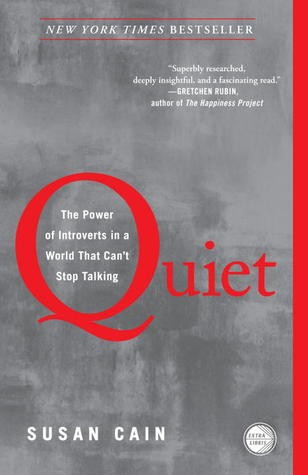
Complete Full-Text Guide to Quiet by Susan Cain
Susan Cain shows that quiet people have superpowers that our loud world ignores, proving that deep thinkers, great listeners, and calm leaders change history.
Prologue & Central Premise
At least one-third of the people you know are introverts. They are the ones who prefer listening to speaking, who innovate and build in quiet rooms, and who favor depth over social small talk.
Yet our modern schools, open-plan offices, and corporate boardrooms worship what Susan Cain calls the Extrovert Ideal—the belief that the ideal human being is bold, loud, gregarious, and happiest in the spotlight.
In Quiet, Susan Cain reveals that this obsession with noise is a massive cultural mistake. Humanity's greatest breakthroughs—from the theory of gravity to the personal computer—were born in solitude.
If you are an introvert, this book will relieve you of the exhausting pressure to pretend to be an extrovert. If you are an extrovert, it will teach you how to understand, collaborate with, and unlock the genius of the quietest people in your life.
Chapter I: Introversion vs. Shyness: A Biological Reality
Introversion vs. Shyness: A Biological Reality
Many people mistake introversion for social anxiety or weakness. Cain clarifies the crucial difference: shyness is the fear of social disapproval or embarrassment; introversion is a biological preference for lower levels of sensory stimulation.
Harvard psychologist Jerome Kagan studied four-month-old infants exposed to popping balloons and loud noises. The babies who reacted strongly with thrashing limbs grew up to be quiet, observant introverts. Their nervous systems were naturally more sensitive to external stimuli.
Respect your stimulation limits; your energy battery is physical.
Introversion vs. Shyness: A Biological Reality — Core Mechanics
At the core of this principle lies a foundational dynamic: How different brains react to loud noise, big crowds, and busy environments.. Understanding this reality is vital because It explains why introverts feel exhausted after social gatherings even when they had fun.
Consider how this operates in practice: An extrovert feels energized by a noisy party; an introvert enjoys the conversation but needs to go home to a quiet room to recharge their battery.
Chapter II: The New Groupthink: Why Solitude Matters for Creation
The New Groupthink: Why Solitude Matters for Creation
Modern schools put children in team pods; modern offices tore down cubicle walls for giant noisy open floors. This trend assumes that all creative genius comes from group brainstorms.
Cain proves that decades of research show the exact opposite: people produce vastly more high-quality ideas when working in private solitude than in group brainstorming sessions. Group dynamics breed social loafing, peer conformity, and fear of looking foolish.
Great ideas are born in quiet spaces.
The New Groupthink: Why Solitude Matters for Creation — Core Mechanics
At the core of this principle lies a foundational dynamic: The quiet, uninterrupted time you need to practice, solve hard problems, and create your best work.. Understanding this reality is vital because Mastery requires deep concentration that constant office chatter destroys.
Consider how this operates in practice: Steve Wozniak working alone at Hewlett-Packard late at night to invent the Apple computer.
Soft Power Is the Strongest Power
Our culture teaches that power is aggressive: pushing your way through, speaking over people, and dominating the room.
Cain demonstrates that true soft power—quiet persistence, deep listening, moral clarity, and non-threatening warmth (exemplified by figures like Rosa Parks, Eleanor Roosevelt, and Gandhi)—shapes history far more permanently than aggressive swagger.
Chapter III: The Quiet Leader and the Free Trait Agreement
The Quiet Leader and the Free Trait Agreement
We naturally look for charismatic, thunderous speakers to be our CEOs and politicians. But Wharton professor Adam Grant found that introverted leaders deliver superior results when managing proactive teams.
Because introverted leaders do not need to be the center of attention, they listen carefully, let employees run with good ideas, and make prudent, risk-aware decisions without ego.
Step into the spotlight when your mission requires it, but always retreat to your sanctuary.
The Quiet Leader and the Free Trait Agreement — Core Mechanics
At the core of this principle lies a foundational dynamic: A personal deal where a quiet person turns up their social energy for an important event, and then takes quiet time alone afterward to recharge.. Understanding this reality is vital because It allows you to perform in public without suffering emotional burnout.
Consider how this operates in practice: A quiet teacher delivering an energetic three-hour seminar, followed by a quiet walk in the park with headphones.
Epilogue & The Living Legacy
There is zero correlation between being the best talker and having the best ideas.
The secret to a fulfilling life is not to force yourself into a mold designed for someone else, but to put yourself in the lighting that lets your natural talents shine.
Never apologize for needing quiet. The world needs the stillness of the observer, the depth of the listener, and the patient focus of the craftsperson.