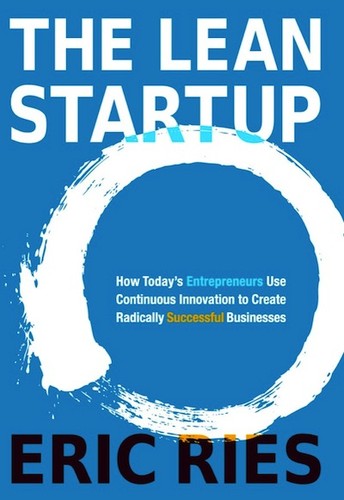
Complete Full-Text Guide to The Lean Startup by Eric Ries
Eric Ries defines a startup as an organization dedicated to creating something new under conditions of extreme uncertainty, introducing the Build-Measure-Learn feedback loop.
Prologue & Central Premise
Most startups fail not because they couldn't build their product, but because they built something nobody actually wanted.
Founders spend months or years behind closed doors writing code, designing logos, and burning through life savings. They launch with huge fanfare—and hear nothing but crickets.
Eric Ries experienced this painful failure firsthand. In The Lean Startup, he introduced a scientific method to building businesses: eliminate waste, test your assumptions in days rather than years, and learn directly from real customer behavior.
Traditional 5-year business plans are pure fiction in an uncertain world. The Lean Startup gives you a concrete, scientific process to figure out what customers will actually pay for before you run out of money.
Chapter I: The Build-Measure-Learn Engine
The Build-Measure-Learn Engine
Traditional management works well when building bridges or cars because the problem and solution are known. Startups, however, operate in extreme uncertainty: you don't even know if customers have the problem you are solving.
Ries argues that the primary unit of progress for a startup is not lines of code written or features shipped; it is Validated Learning. You formulate a hypothesis (e.g., 'Busy parents will pay $20/month for pre-made healthy lunchboxes'), build the smallest possible test, measure real behavior, and decide whether to pivot or double down.
Minimize the total time through the Build-Measure-Learn loop.
The Build-Measure-Learn Engine — Core Mechanics
At the core of this principle lies a foundational dynamic: A continuous cycle: turn ideas into products, measure customer response, and learn whether to pivot or persevere.. Understanding this reality is vital because Speed of iteration is the ultimate competitive advantage in business.
Consider how this operates in practice: Setting up a landing page with a 'Buy Now' button before creating the product to see if anyone actually clicks it.
Chapter II: The Minimum Viable Product (MVP)
The Minimum Viable Product (MVP)
Many entrepreneurs confuse an MVP with a cheap or buggy product. An MVP is not a broken version of your dream product; it is the fastest, simplest experiment that allows you to start learning.
Consider Zappos founder Nick Swinmurn. He didn't build giant warehouses or spend millions on shoe inventory. He simply walked into local shoe stores, took photos of shoes, posted them on a basic website, and when someone ordered, he bought them at retail price and shipped them from the post office. He proved people were willing to buy shoes online with almost zero upfront capital.
If you are not embarrassed by the first version of your product, you launched too late.
The Minimum Viable Product (MVP) — Core Mechanics
At the core of this principle lies a foundational dynamic: The simplest early version of a product you can put in front of real customers to test whether they actually want it.. Understanding this reality is vital because It stops you from wasting months or years building things nobody wants.
Consider how this operates in practice: Using a manual concierge service or spreadsheet before writing automated software.
A Pivot Is Not Failure; It Is Learning
In traditional culture, changing direction is seen as admitting defeat. In the Lean Startup, a pivot is a structured course correction designed to test a new fundamental hypothesis.
Twitter started as Odeo, a failed podcast network; Instagram started as Burbn, a cluttered whiskey check-in app. Successful companies rarely finish as the idea they started with; they survive because they listened to customer data and pivoted fearlessly.
Chapter III: Vanity Metrics vs. Actionable Metrics
Vanity Metrics vs. Actionable Metrics
Startups love showing graphs with 'total sign-ups' going up and to the right. Ries calls these Vanity Metrics. If you get 100,000 signups from a viral press release, but 99% of them never log in again, your business is dying.
Actionable metrics look at cohorts: of the 100 people who signed up this Monday, how many returned on Tuesday, how many made a purchase, and how many recommended it to a friend? Cohort retention tells you whether you have real product value.
Metrics are for making decisions, not making you feel good.
Vanity Metrics vs. Actionable Metrics — Core Mechanics
At the core of this principle lies a foundational dynamic: Tracking real customer behavior (like repeat usage) instead of misleading vanity metrics (like total website pageviews).. Understanding this reality is vital because It forces founders to face reality before running out of runway.
Consider how this operates in practice: Tracking 30-day user retention rather than total registered user counts.
Epilogue & The Living Legacy
Entrepreneurship is not a mystical art reserved for visionary geniuses who lock themselves in garages.
It is a disciplined, scientific management practice that turns uncertainty into clarity through rapid experimentation, honest customer feedback, and continuous adaptation.
Stop guessing what the world needs. Build an experiment, measure the truth, and adapt until you win.