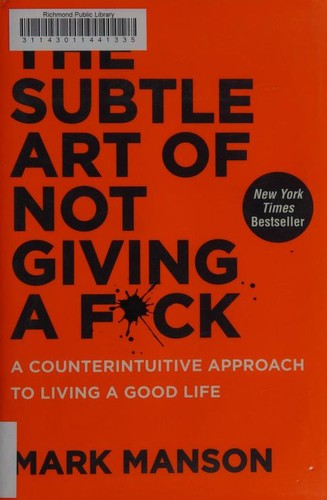
Complete Full-Text Guide to The Subtle Art of Not Giving a F*ck by Mark Manson
Mark Manson cuts through fake, forced positivity to show that a good life isn't about pretending everything is perfect—it's about learning how to handle everyday problems with courage and honesty.
Prologue & Central Premise
Every self-help book, Instagram feed, and commercial tells you the same message: smile more, buy more, be richer, be happier, be more positive. And yet, everyone is more stressed, anxious, and exhausted than ever.
Mark Manson wrote this book to tell you something refreshing: life has problems, pain is inevitable, and trying to be happy all the time is what makes you miserable.
True peace of mind does not come from caring about everything; it comes from learning to give a f*ck only about what is genuinely important to you.
We waste endless hours stressing over bad Wi-Fi, rude strangers, and keeping up with people on social media. This book helps you prune away the trivial junk so you can invest your energy where it actually counts.
Chapter I: The Feedback Loop from Hell
The Feedback Loop from Hell
Manson points out that society today tortures itself with meta-emotions. You feel anxious about paying your bills, and then you get angry that you feel anxious. You feel sad about a breakup, and then you feel guilty that you aren't radiating positive vibes like your friends on social media.
He calls this the Feedback Loop from Hell. The more you desperately chase feeling good all the time, the more unhappy you feel. But when you accept your struggles, you immediately feel lighter and more at peace.
Stop giving a f*ck about feeling bad; it is completely normal to feel bad sometimes.
The Feedback Loop from Hell — Core Mechanics
At the core of this principle lies a foundational dynamic: A simple rule from philosopher Alan Watts: the harder you chase feeling good, the more miserable you feel, because chasing it just reminds you of what you don't have.. Understanding this reality is vital because When you accept your flaws and struggles, your anxiety naturally melts away.
Consider how this operates in practice: Accepting that public speaking makes you nervous calms your body down; fighting the nervousness makes you panic.
Chapter II: Choose Your Struggle: What Pain Do You Want?
Choose Your Struggle: What Pain Do You Want?
Everyone wants a great body, financial freedom, and a rewarding career. But very few people ask the real question: 'What pain am I willing to sustain?'
A great body requires hours of sore muscles and saying no to dessert. A thriving company requires 80-hour workweeks and dealing with angry customers. If you only love the fantasy of the result and hate the daily struggle of the process, you won't get anywhere.
Don't ask what you want to win; ask what you are willing to bleed for.
Choose Your Struggle: What Pain Do You Want? — Core Mechanics
At the core of this principle lies a foundational dynamic: Understanding that every career and goal comes with tough days; the secret is picking the hard work you actually enjoy doing.. Understanding this reality is vital because It grounds your ambitions in realistic daily stamina.
Consider how this operates in practice: If you love playing guitar for hours until your fingers bleed, you might make a musician; if you only love the idea of standing on stage, you won't.
Memento Mori: Death Puts Everything in Perspective
The final chapter of this seemingly irreverent book is about death. Manson recounts standing on the edge of a cliff in South Africa, contemplating his mortality.
Death is the ultimate filter. When you realize that you and everyone you love will eventually be dust, it strips away the petty drama. Caring about minor social embarrassments looks absurd in the light of mortality.
Chapter III: Fault vs. Responsibility
Fault vs. Responsibility
Many people confuse fault with responsibility. If someone hits your parked car, it is not your fault. But it is 100% your responsibility to call the insurance company and get it repaired.
Victimhood happens when you refuse to take responsibility for your life simply because an event wasn't your fault. Blaming others may feel emotionally satisfying for ten minutes, but it leaves you powerless to change your future.
It may not be your fault, but it is always your responsibility.
Fault vs. Responsibility — Core Mechanics
At the core of this principle lies a foundational dynamic: Taking complete ownership of your emotions and responses regardless of who caused the problem.. Understanding this reality is vital because Whoever you blame for your situation retains power over your situation.
Consider how this operates in practice: If your business partner walks out on you, you can spend two years crying about betrayal, or take responsibility for restructuring the business today.
Epilogue & The Living Legacy
You will never have a life free of pain, rejection, and confusion. And that is okay.
The good life does not come from running away from difficulty, but from picking the struggles that give your life meaning, dignity, and purpose.
Care deeply about a few vital things, shrug at the rest, and enjoy the ride while it lasts.