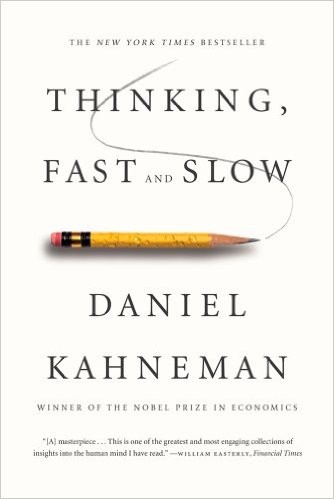
Complete Full-Text Guide to Thinking, Fast and Slow by Daniel Kahneman
Nobel laureate Daniel Kahneman explains the two systems that drive the human mind—fast, emotional intuition and slow, logical deliberation—and how cognitive biases trick our brains every day.
Prologue & Central Premise
Ever walk into a store intending to buy one item, and walk out with $80 worth of random goods? Ever feel completely certain about a person on first glance, only to find out you were wildly mistaken?
You aren't foolish—your brain is just wired to take cognitive shortcuts. Nobel Prize winner Daniel Kahneman spent decades proving that inside your skull, two distinct systems are constantly fighting for control.
One is fast and emotional; the other is slow and analytical. When you learn how they clash, you unlock the ultimate defense against bad decisions.
Most bad financial investments, failed business deals, and broken relationships stem from mental blind spots. Understanding your brain's glitches gives you a superpower: knowing when to trust your gut and when to slow down and calculate.
Chapter I: Two Minds, One Skull: System 1 vs. System 2
Two Minds, One Skull: System 1 vs. System 2
Kahneman divides thought into two characters. System 1 is fast, automatic, emotional, and unconscious. It reads facial expressions, ducks when a ball flies at your head, and completes the phrase 'bread and...'.
System 2 is slow, effortful, and logical. It turns on when you calculate 17 × 24, parallel park into a tight space, or compare two insurance policies. The problem? System 2 uses massive glucose and energy, so it stays asleep whenever possible, letting impulsive System 1 run the show.
Your gut makes instant guesses; you have to push yourself to double-check them with real facts.
Two Minds, One Skull: System 1 vs. System 2 — Core Mechanics
At the core of this principle lies a foundational dynamic: Your brain's two gears: fast automatic gut reactions vs. slow, careful thinking.. Understanding this reality is vital because Knowing which system is in charge prevents expensive, knee-jerk mistakes.
Consider how this operates in practice: Glancing at a billboard is System 1; proofreading a legal contract is System 2.
When your pupil diameter is measured under infrared cameras, it dilates directly in proportion to mental effort. Calculating 2+2 causes zero dilation. Calculating 17×24 causes your pupils to expand to maximum size. Mental effort is physical.
Chapter II: What You See Is All There Is (WYSIATI)
What You See Is All There Is (WYSIATI)
System 1 loves constructing coherent stories from whatever fragments are available. It never stops to ask: 'What crucial facts are missing from this picture?'
This creates the illusion of certainty. When we hear one side of a story, we instantly feel confident we understand the whole truth. We form opinions on companies, politicians, and strangers based on a tiny slice of data.
Never confuse a good story with the whole truth.
What You See Is All There Is (WYSIATI) — Core Mechanics
At the core of this principle lies a foundational dynamic: Jumping to quick conclusions using only what is right in front of you, without asking what facts are missing.. Understanding this reality is vital because It breeds unwarranted arrogance and blind spots.
Consider how this operates in practice: Buying a stock because their product looked sleek in a store, without checking their balance sheet or debt load.
Confidence Does Not Mean You Are Right
Most people assume that when they feel 100% confident, they must be correct. Kahneman proves that subjective confidence is simply a measure of cognitive ease.
If a story is simple and has no obvious contradictions, your brain feels satisfied and reports high confidence—even if the story is built on total falsehoods. High confidence is an emotional feeling, not an objective truth.
Chapter III: Loss Aversion and the Pain of Defeat
Loss Aversion and the Pain of Defeat
Human beings are wired with asymmetric emotion: the pain of losing $1,000 is roughly twice as intense as the pleasure of gaining $1,000.
This evolutionary wiring helped our ancestors survive in harsh environments where losing food meant starvation. But in modern finance, it causes irrational behavior: people hold onto plummeting investments for years just to avoid acknowledging the loss.
Focus on what will happen next, not on money you already lost.
Loss Aversion and the Pain of Defeat — Core Mechanics
At the core of this principle lies a foundational dynamic: The painful fact that losing something hurts twice as much as gaining the same thing feels good.. Understanding this reality is vital because It makes people either too terrified to take smart risks, or crazy reckless when trying to get their money back.
Consider how this operates in practice: Refusing to sell a house for 10% below what you paid, even though the real estate market has crashed.
Epilogue & The Living Legacy
We like to think of ourselves as rational beings calmly weighing the evidence. In reality, we are intuitive storytellers who use logic primarily to defend what our gut already decided.
True intellectual maturity is having the humility to doubt your first impressions. When you understand your brain's built-in biases, you gain the clarity to pause, consult checklists, and see reality as it actually is.
Slow down your thinking when the cost of being wrong is high.